Test Blog Post:
Topic Proposal:
Folk Nursery Rhymes
Working Inquiry Question:
How can folk nursery rhymes enhance early literacy in children?
Inquiry Question Assignment-
Nursery
Rhymes
The
topic that I want to inquire into is how nursery rhymes can enhance early
literacy in children. This area of research I feel is to be very interesting to
someone such as a Child Therapist, Kinesis, Rehab Therapist, etc. I chose this
topic because I feel that in would be interesting to see what the outcome is as
to whether or not this theory has more positive effects than negative. To me I think that this topic could help me
to determine if nursery rhymes are a good way to help our children in
developing their literacy.
I
would say that I do not have that much information as to any personal knowledge
about this topic, but from what I do know nursery rhymes are a good way to
increase a child’s cognitive learning. They can help a child learn how to sound
words out that rhyme with other words and they help by making a child’s
learning experience not so boring. I think that nursery rhymes do more good for
a child than bad. Yes, people may
disagree and say that nursery rhymes are bad for children because it teaches
them things about past history that they should be learning about at such a
young age, but to me children are not focused on what they actually mean. The
children are more focused on trying to sound out the words and remembering the
way the rhymes are said.
I
feel that I need to know more about how exactly nursery rhymes can benefit our
children’s learning. I mean yeah I grew up with having to memorize rhymes and
having to tie them in with what I was being taught as a young child, I never
understood exactly how they helped me. With this being said I think that by
using this topic it will expand my knowledge and educate me more on this
subject. I will use internet sources such as online articles and facts and also
library sources to help research what I am looking for.
The
way I came up with this topic is very weird in my opinion. I was working on an
assignment for class while listening to a friend of mine play a game called
Assassins Creed. This game is one of those games where you can be in the past
present or the future through your journey, but mind you this having nothing to
do with the topic for class I came across a character on the game. The
character was a little boy who spoke in an English accent. Hearing this little
boy talk made me think of back in the old days where little kids would run
around singing “ring around the rosy”. This made me have the idea to put two
and two together to come up with the topic to see what I could do with nursery
rhymes and children.
I
am definitely most curious to know exactly what the effects are on children who
are taught with these forms of rhymes to enhance their learning process. In ways
of thinking about my topic I wonder, how memorizing nursery rhymes help
children learn? What exactly is a nursery rhyme? How can they be beneficial? And
can they be effective or not?
How
can nursery rhymes enhance early literacy in our children?
Inquiry Blog Post 2:
These are a few pictures of some of the nursery rhymes that I grew up with and many other children as well.


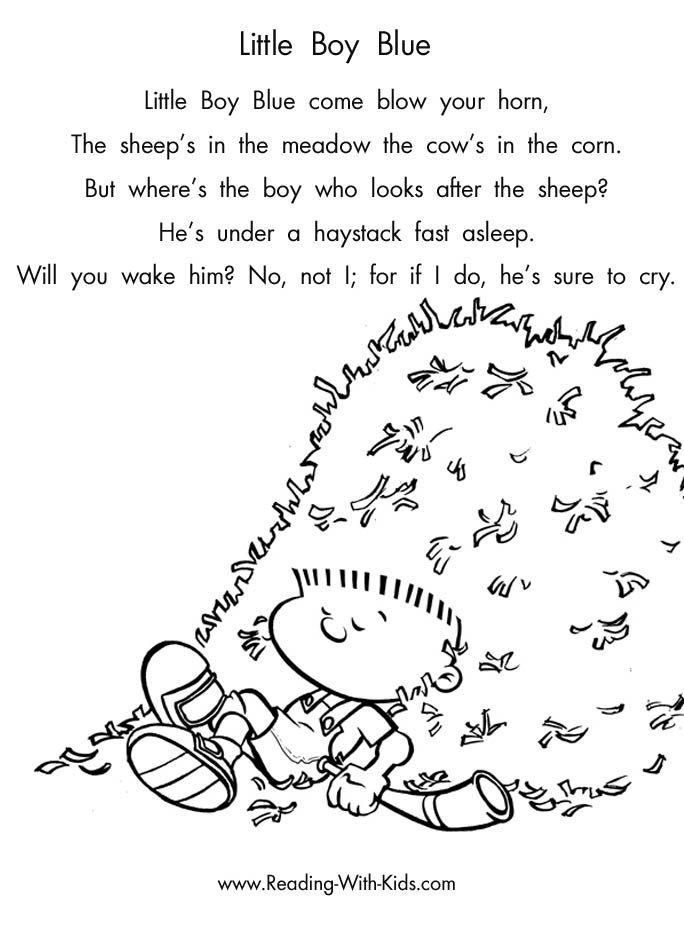
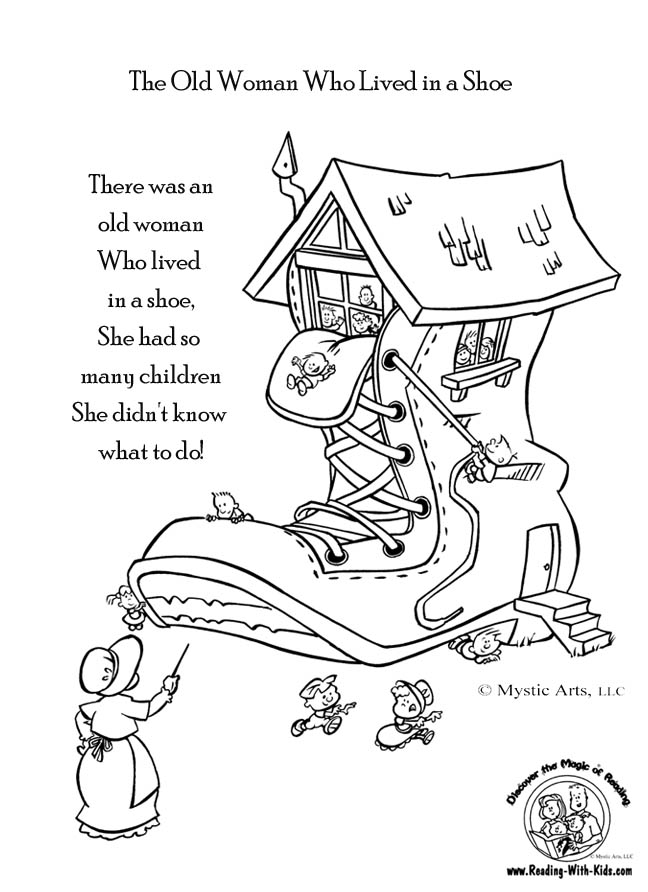
This link gives us a few different statement on how nursery rhymes effective on our children.
This is a video that shows a little girl reciting humpy dumpy and using motions to go along with the way the nursery rhyme is said.
This is a link that shows us the importance of nursery rhymes and shows us how we can use them to teach our children.
This link gives us a couple different reasons why nursery rhymes are good for our children and it also gives us some tips as to what we can do with them to make our children enjoy learning.
Inquiry Blog Post 3:
IP Research Proposal-
Your finalized
Inquiry Question
> How can folk nursery rhymes enhance early
literacy in children?
Research
sub-questions or Sub-Areas of Study
> How can memorizing nursery rhymes help children
learn?
> What is a nursery rhyme?
> How are nursery rhymes good for learning?
> In what ways can nursery rhymes be beneficial to
children?
> Nursery Rhymes and the Brain…
> Effects of Nursery Rhymes…
> Nursery Rhymes effective or not…
> Rhymers Are Readers: The Importance of Nursery
Rhymes…
> Learning through the Early Years: The Benefits
of Repetition and Variation…
Important Key Terms
and People in the Field
> Growth and development
> Early childhood literacy
> Children’s Brain
> Literacy
> Children
> Parents
> Teachers
> Therapist
The story behind your
interest in this question
> The story behind this is very funny. I was
watching a friend of mine play Assassins Creed and it’s one of those games
where you can be in the past, present, or future. I wasn’t paying very much
attention, but I was listening to the game as I was doing my own thing. The
character on the game was British and started talking and for some random
reason I started singing ring around the rosy. I then got the idea to put two
and two together and wondered how nursery rhymes could enhance the literature
of a small child.
What you think you
know and what you are most curious to find out?
> What I think I know about this topic is that
this scenario has to do with some form of child development of the brain. I
know that rhyming is a good form of increasing vocabulary and it helps pronunciation
of new words that sound the same.
> I am definitely most curious to find out exactly
how nursery rhymes are effective in enhancing early literacy in children. Also, whether or not they can benefit us as adults as well.
Possible research
methodologies—where and how will you gather information?
> I will be gathering information from many online
sources and using the library’s website and research sources as well.
> I want to gather as much information on this
topic because I feel really good at what I’m researching and I feel that I can
learn a lot from this assignment.
Possible
audiences—who would be vested in your research?
> The possible audience that I think would be
vested in my research would be Early Childhood Researchers, Child Therapist,
Child Psychologist, Psychiatric Practice, Neurosurgeons, Kinesis, and Rehab
Therapist.
Inquiry Blog Post 4:
Reaction to IRP Presentation & 5 comments-
Inquiry Blog Post 5:
Annotated Bibliography-
Inquiry Blog Post 6:
Inquiry Blog Final Draft-
Inquiry Blog Post 7:
Overall Reflection on the Inquiry Project and Blog-
Inquiry Blog Post 4:
Reaction to IRP Presentation & 5 comments-
My reaction to the
IRP Presentation is that I feel a whole lot better about as to what to do my
paper on because to be honest from the beginning of this assignment I had NO
CLUE as to what to do for any of it. I
am still having a little trouble with figuring out an exact topic to argue, but
today in class the suggestions and ideas were definitely great help!
Yes, I do believe
that this project is challenging my ability as a writer, but I also feel that
in doing this assignment I am growing as a writer and a student to figure out
what to do and what to write about. This assignment like many others I am most definitely
having a hard time coming up with a set topic, but from the suggestions in
class today I feel that I think I have a good one!! I don’t necessarily like
all the different assignment that we have to complete because again not knowing
exactly what to write about and having to turn in an assignment is hard and my
the pressure of the assignment much more difficult.
~ I wanted to write on here that because of me changing around the way by blog is set up I think it may have messed up some of the post that other students have commented on because it shows that the page requested is not available. For this I am sorry and I didn't realize it done this, but I just wanted to make you aware incase you couldn't find what you were looking for.
Inquiry Blog Post 5:
Annotated Bibliography-
-Lonigan, Christopher J. "Child Development and Emergent Literacy." Child Development. By Grover J. Whitehurst. 3rd ed. Vol. 69. Oxford: Wiley-Blackwell, 1998. 848-72. Print.
This article offers a preliminary typology of children's emergent literacy skills, a review of the evidence that relates emergent literacy to reading, and a review of the evidence for linkage between children's emergent literacy environments and the development of emergent literacy skills.
-Bryant, Peter, and Lynette Bradley. "Rhymes, Nursery Rhymes, and Reading in Early Childhood." Merrill-Palmer Quarterly. By Morag Maclean. 3rd ed. Vol. 33. Detroit: Wayne State UP, 1982. 255-81. Print.
This article is about the theory of how young children learn to analyze the component sounds in words with the help of a common linguistic routine. For example Rhymes and Nursery Rhymes. Assessments of this theory was made of the children’s knowledge of Nursery Rhymes and their phonological skills, particularly the detection and production of rhyme and alliteration.
-"Advantages of Nursery Rymes to Little Children." Bidorbuy. Bid Or Buy, n.d. Web. 22 Nov. 2012. <http://www.bidorbuy.co.za/article/5978/Advantages_of_Nursery_Rhymes_to_Little_Children>.
This entry tells us what skills are used to the advantage of what the nursery rhymes do for our children. It tells us the skills and tells us what each skill does to help.
-South Wales Echo, Our Correspondent. "How Nursery Rhymes Can Help Children Learn." Wales Online. Wales Online, 11 Oct. 2011. Web. 22 Nov. 2012. <http://www.walesonline.co.uk/news/education-news/2011/10/11/how-nursery-rhymes-can-help-children-learn-91466-29571675/>.
This article is about how Nursery Rhymes can help our children. It tells us how they can help expand a child's imagination and improve their vocabulary. This article also states how parents can introduce Nursery Rhymes to their children and what things they can do with them to help improve the development of the child.
Inquiry Blog Post 6:
Inquiry Blog Final Draft-
Williams
Timothy
Teacher: Kendra Andrews
English
1102
13
December 2012
Can
nursery rhymes be effective in enhancing our children’s literacy?
We
have all grown up with the well-known set of nursery rhymes, such as “Humpty
Dumpty,” “Twinkle Twinkle Little Star,” or “Itsy Bitsy Spider.” According to
Wales Online “if a child knows eight nursery rhymes by heart by the time they
are four years old, they are usually among the best readers and spellers in
their class by the time they are in Year 3.” Being such an advocate to the
advancement of children learning to read and write nursery rhymes are one of
the greatest methods to enhancing children’s literacy. Nursery rhymes are a basic cultural literacy
and are known to be the gifts of language that all children deserve to own.
Nursery
rhymes can be used as a great way to enhance our children’s ability to hear,
recognize and use letter sounds. This method of teaching helps give children
the practice they need to learn the language variations of daily use. Some nursery rhymes are short and full of
alliteration and rhymes that make it ideal for children to quickly learn how to
play with language and make it their own. There are many nursery rhymes that
that show forms of alliteration, onomatopoeia, and imaginative imagery. For
example: References of the Nursery Rhymes: Foundations for learning from the kbyuelevn.org website states that
the alliterations from “Goosie Goosie Gander”-and the onomatopoeia's of “Baa Baa Black sheep”- are perfect examples of this. Because
nursery rhymes are short and easy to repeat, they become some of a child’s
first words and sentences, which leads back to language development. When a
child hears a nursery rhyme, they tend to make the sounds of vowels and
consonants that they hear. By doing this they learn how to put different sounds
together to make words.
Children
also are able to practice pitch, volume, and the rhythm of language. For
example, many different people speak differently. When giving a speech or
telling a story their tone of voice or volume can be different from if they
were to ask someone a question. Children for example are able to hear words in
nursery rhymes that they would not originally hear in everyday language,
therefore allowing them to listen and learn different words and sounds they
make out.
Imagination
greatly expands how a child communicates with the outside world. Nursery rhymes
help children use their imagination to create a world all of their own and
assist in the blossoming of creativity. This helps build visual imagery that
can be later used through visualization, a great tool used to in-vision oneself
achieving personal goals, which makes those goals more realistic.
It is often said that children who
are taught nursery rhymes at a young age are known to have a greater passion
for reading poetry, short stories, and many other types of literature. In
addition, children also show more willingness to write and can develop a sense
of better writing habits later in life. When a child is able to memorize, and recite
a nursery rhyme they are developing listening skills in a non- threatening way
and achieving a higher level of confidence through the birth of important
speaking skills.
Tony Stead, senior
national literacy consultant for Mondo Publishing in New York, described
research showing that the ages of six through eight is the
golden age for learning. During this
time frame a child can remember things faster and for a longer period of time
than in any other time in their lives. This is why it is important to teach
young children the methods of nursery rhymes before they reach a certain age
because it can help them grow upon future skills of development.
Nursery
rhymes are not just in the form of poems or songs. A nursery rhyme can be made
into game or some form of playful activity. For example, during the nursery
rhyme “Ring around the Rosy” children often lock hands and spin in circles
while reciting it. Then, when the children say “they all fall down” they unlock
their hands and fall on their back. When a child has help from a parent or
teacher and they both read, sing, play and act out a nursery rhyme together.
They learn together, and it makes it more enjoyable for the child as well as
the one engaging. By doing this, the child has the opportunity to enhance their
acting skills as well as their involvement with others skills like
communication.
Another
benefit from nursery rhymes is the promotion of word pictures. Kay Vandergrift, Professor Emerita of Children’s Literature at
Rutgers University points out, nursery rhyme books are often a child’s first
experience with literacy: "Even before they can read, children can sit and
learn how a book works." Many nursery rhyme books are
flowing with different visuals and pictures that allow a child to engage the
more creative part of their mind. This helps children be more aware of certain
shapes and objects around them and notice other items when they see them. This
can also contribute to the development of understanding humor. Without the
association of facial expressions and tones, how do you think a child will
understand what humor is?
People
often argue that nursery rhymes can have a negative effect on our children
because of some of the more dark meanings behind the childish rhymes. The
nursery rhyme “Humpty Dumpty” reads “Humpty Dumpty sat on a wall. Humpty Dumpty
had a great fall. All the kings’ horses, and all the kings’ men, couldn't put
Humpty together again.” There are many guesses as to the meaning of this
nursery rhyme but one of the more popular hypothesis is that “Humpty Dumpty”
refers to King Richard III, the hunchback monarch. While fighting in the battle
of Bosworth Field, King Richard fell from his steed, rightfully named “Wall.”
King Richard was immediately butchered where he fell, his body being hacked to
pieces, obviously making it impossible for “all the kings horses and all the
kings men” to put King Richard back together again. This obviously, makes the
childish rhyme seem much less... childish. Some think that by teaching these
rhymes to our children we are putting negative and twisted thoughts into the
minds of our youth but people fail to realize that a small child pays more
attention to the visual aspects of any instruction. Children, at a young age,
do not put any deep thought into what they are saying or what the words
actually mean. When a child often
recites a nursery rhyme they tend to focus more on the tone and how to say the
words rather than what phrase actually means. For example, in the rhyme “Mary,
Mary, Quite Contrary” this poem seems to be an n innocent poem
about an English garden, but in fact it’s quite the contrary. The poem is about
Queen Mary of England the first, who became well known as Bloody Mary by the
end of her reigning as queen. The poem
is about her glorious graveyard of slain protestants, as she was known to be a
genuine Catholic ruling England at her finest during a time of religious
turmoil. In this poem it talks about silver bells and cockleshells which in her
case were torture devices, and the “maid in all in a row” refers back to a
device that preceded the guillotine known as “the maiden”.
Nursery
rhymes are definitely a great factor in enhancing a child’s literacy.
Generations of people have passed down this proven method of learning for
children. “Many of these songs were not
originally for children,” says Kay Vandergrift, Professor Emerita of Children’s
Literature at Rutgers University. Most of these songs are a part of an
oral-based society that relayed information, spread coded rumors about
ancestors; known to be our authority figures, and worked through many evident
moral dilemmas in children and adults through the use of song and rhyme.
Inquiry Blog Post 7:
Overall Reflection on the Inquiry Project and Blog-
My overall reflection on this inquiry project is well... I really
enjoyed it. :) Yes, I feel that this project has definitely been
stressful to deal with all the confusion with the different assignments, but I
think it all worked out just fine.
This Inquiry Project to me was interesting to do, but I wish that
it would have been a little more fun with knowing what exactly I was doing. I
always feel more comfortable if I know exactly what I'm writing about. In the
end like you said, Ms. Andrews that was the whole purpose of the assignment of
not knowing what you were writing about exactly. BUT in the long run I will say
that in doing this assignment it has made my English 1102 class experience fun.
I'm not usually one on writing papers and even reading unless I'm doing either
or about something that is of my interest. I also feel that this project is by
far the best way to get a student to do their work ha-ha.
I hope that to whoever has to complete this assignment like I had
to really enjoy doing it as much as I did. It was and still is a good learning
experience!!!
This blog thing however, well it was okay. I think I have to right to say I HATE BLOGGER!! Nah, I'm just kidding. It's really not so bad once you kind of get to figuring out exactly how to use it. There are still some things that I don't know how to do on here, but I guess that will be a challenge for ANOTHER CLASS!!!! :)
This blog thing however, well it was okay. I think I have to right to say I HATE BLOGGER!! Nah, I'm just kidding. It's really not so bad once you kind of get to figuring out exactly how to use it. There are still some things that I don't know how to do on here, but I guess that will be a challenge for ANOTHER CLASS!!!! :)

You could also tie in how babies take statistics on everything they hear. That is why they can learn different languages so fast. Heres a video.http://www.ted.com/talks/patricia_kuhl_the_linguistic_genius_of_babies.html
ReplyDelete